

WESTERN ISLES
This video is not available to view remotely
Full length video - onsite only

Please read Understanding catalogue records for help interpreting this information and Using footage for more information about accessing this film.
Title: WESTERN ISLES
Reference number: 0028
Date: 1942
Director: d. Terence Egan Bishop
Production company: Merton Park Productions
Sound: sound
Original format: 35mm
Colour: col
Fiction: non-fiction
Running time: 14.00 mins
Description:
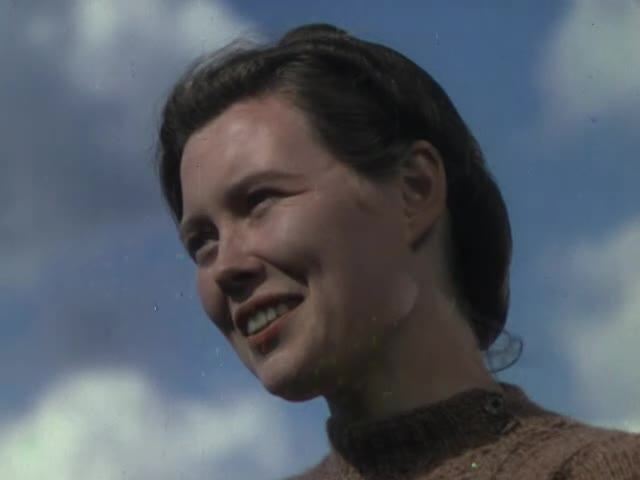
Life on Harris in the Western Isles during World War II. A local family await news of their son after the sinking of the vessel "Atlantic Queen".
Scenes of fank (gathering of sheep) shot at Scarister. Based on real life incident involving islander Angus Murray.
See also SCOTLAND'S WAR, transmitted Oct. 1992 - a programme on real life incident involving Angus Murray that prompted the storyline of this film.
For enquiries relating to copies of this film, please contact the bfi
Credits:
ph. Jack Cardiff
ed. C. Beaumont
sd. rec. Charles Tasto
m. William Alwyn
comm.w. Terence Egan Bishop
comm.s. Joseph MacLeod
Among the islanders who appear in the film are: The Mother Bean Ailein The Father Somhaisle Mac Tille Mhoire The Son Iain Mac Neill Chiolais The Daughter Kitty MacLeod (Catriona MacLeoid) Factor played by Jock McCallum of Rodel Hotel Skipper of lifeboat - John Gillies [motor mechanic from Harris. Age 14 at the time].
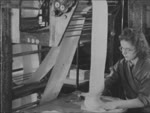
Shotlist: Credits. The story of life on Harris during the Second World War. The family's daily work continues after they hear of the sinking of the "Atlantic Queen' by a German submarine with the knowledge that one of their family was a crew member. The survivors of the ship row 300 miles in a lifeboat to the shores of the Hebrides. Shots of life and work on the island, including fishing, making the "browns" and "greens" of Harris tweed, washing, spinning, carding, weaving and waulking the tweed. Shots of peatcutting and gvs of the life-style of the people (14.10)